

For many people, the dream of becoming a doctor has always been top of mind. And then — a life mishap or unforeseen circumstance clouds the dream. A few lower test scores have suddenly invaded and the GPA has hit a downward slope. Is the dream of achieving that white coat over?
Not so fast, says Palka Kumar, dean of enrollment management and student success at Ponce Health Sciences University St. Louis. The school’s one-year Master of Science in Medical Science (MSMS) program enhances the credentials of students with a bachelor’s degree for entry into an M.D. program and other health sciences pathways — even when the incoming scores might be lower than expected.
“Earning a coveted spot in an M.D. program is difficult, to say the least,” Kumar said. “Add to that a student who may have come from an underserved community who may not have had the same resources as someone from a more affluent area. Or perhaps there was a family circumstance such as an illness — like the recent pandemic — that may have forced a student to miss a few classes, thereby resulting in a lower grade. A whole myriad of things could have happened that don’t reflect the potential of that particular individual.”
Every student applying to PHSU-STL has an opportunity to complete a “discovery” interview. It is here where students get a pretty good reality check. If there are gaps in grades, academic performance or research/clinical experience, they are given the chance to discuss their shortcomings and plans for improvement. Possible solutions and pathway plans are also discussed.
“The first thing we want to do is to ask that individual, what happened to them academically? Is it circumstance, or do they maybe just not have the academic drive for medical school?” Kumar said. “If there is a circumstance that led to a low GPA, what exactly is their game plan? It oftentimes comes back to building their confidence up because ultimately, they have to do the work here to fix the situation. If there are gaps that can’t be fixed in three or six months, maybe they have to put off med school for another year to first offset the academic side.”
According to Kumar, there are many steps a student can take that show they are serious about a career in medicine. She advises that prior to applying to Ponce, students could shadow someone in the areas that are their weakest, develop a powerful personal statement that reflects their true ability, volunteer at a clinic or hospital, take supplemental MCAT classes or participate in workshops on medical school registration, to name a few.
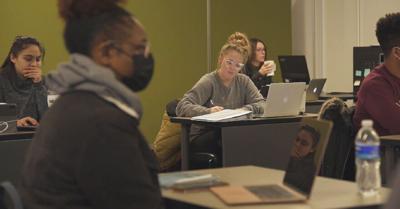
“This is an intensive, one-year program that mimics the first year of medical school,” Kumar said. “When our students graduate from here, they have additional academic preparation in conjunction with their undergraduate GPA that could potentially benefit their medical school applications. And with an above average graduation rate, we can personally sense the overwhelming sense of accomplishment they experience as they walk across that stage.”
Prospective students can learn more here.