


CHAMPAIGN, Ill. — Individuals and teams from the University of Illinois Urbana-Champaign who have made a visible, tangible impact on society were recognized with the 2026 Campus Awards for Excellence in Public Engagement.
Faculty, staff members, students and community members at Illinois who engage the public to address critical civic and community issues at the local, state, national and global level are honored with the awards each year. The 2026 honorees were awarded at a May 20 ceremony.
The recipients this year include two faculty members, Smitha Vishveshwara and Kelley Lemon, along with the Spurlock Museum of World Cultures team.
Distinguished Award for Excellence in Public Engagement
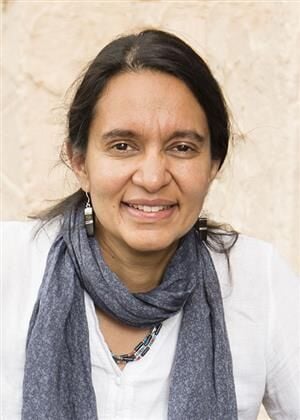
Vishveshwara, a professor of physics in The Grainger College of Engineering, is the recipient of the Distinguished Award for Excellence in Public Engagement.
People are also reading…
As a physicist whose work considers everything from strange emergent quantum particles to condensates aboard the International Space Station, Vishveshwara’s research spans a range of topics in quantum condensed matter theory. She also considers herself a science-artist, enamored by the elegance of both physics and the arts and the interplay between the two. It is that interdisciplinary overlap that has animated Vishveshwara’s work in presenting approachable, creative expressions of her scholarship to the public.
Many years into her professorship at Illinois, after immersing herself in the arts and building a community of students, faculty, staff and local Champaign-Urbana residents, she co-founded the Collective for Art-Science, Creativity and Discovery, etc., otherwise known as “CASCaDe.” Out of this collective sprung the theater piece co-created with theater-maker Latrelle Bright, titled “Quantum Voyages,” a tale of two voyagers exploring the quantum realms that inhabit Vishveshwara’s research. Amid the storytelling, music compositions and dance choreography of the performance were appearances on stage by real physicists detailing scientific insights through poetry. Other large-scale productions include the performances “Quantum Rhapsodies” and “The Joy of Regathering” along with public physics festivals, together engaging tens of thousands of attendees in the world of quantum physics.
Among her first and most enduring forays into this harmony of arts and science is the popular project-based course she created at Illinois — Where Art Meets Physics — in which students immerse themselves among scientific research projects and modes of artistic media. By exploring through creative fragments in these disciplines, the students transform into creators themselves until organically designing a public exhibit of their creations at the culmination of the semester. In 2025, the American Institute of Physics honored Vishveshwara with the Andrew Gemant Award for her years of blending science teaching, theater and art to communicate the principles of physics to the general public. She also served on the steering committee for the United Nations-proclaimed “2025 International Year of Quantum Science and Technology,” a public awareness campaign that celebrated a hundred years of quantum mechanics and its impact on all aspects of life through thousands of worldwide events.
Emerging Award for Excellence in Public Engagement
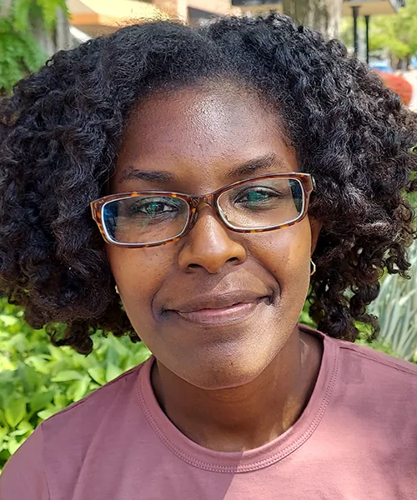
Lemon, a professor of landscape architecture in the College of Fine and Applied Arts, is the recipient of the Emerging Award for Excellence in Public Engagement.
Since joining the Department of Landscape Architecture in 2021, Lemon’s research focus and community engagement are not the products of academic strategy but deeply rooted in place, identity and long-standing investment. Lemon’s study of Black farmers and agricultural landscapes in Illinois harkens back to the cornfields that surrounded her during childhood. And her partnerships in the East St. Louis region, where she grew up and still has family, seek to improve the lives of residents there through food security and trauma relief via carefully considered landscape design.
For the Jackie Joyner-Kersee Food, Agriculture and Nutrition Innovation Center, Lemon identified an immediate opportunity when asked to review a master landscape plan of a $23 million facility already under construction. She mocked up adjustments that created spaces for reducing anxiety and supporting mental health — designs that were implemented in the finalized landscaping plan. When another East St. Louis organization, Lansdowne UP, asked for landscaping and planting plans for its new market-rate housing development, Lemon and her students created a multilayered program to attract residents to the city by rebuilding the landscape ecology, improving health outcomes and engaging youth in hands-on landscape architectural design.
Building and mentoring the future pipeline of landscape architects is a sustained priority for Lemon. She introduces students to community-engaged practice both in the field and through community-engaged grants. Her landscape architecture studio recently collaborated with the Trails of the Grand Prairie to envision a new trailhead near Allerton Park, and two of her students continued on the project through a paid internship. She also believes in the power of showing young children who rarely encounter landscape architects that the profession exists and that they, too, belong in it. Lemon created an interactive activity booklet introducing landscape architecture, empowering children in East St. Louis and beyond to see themselves as active participants in changing the landscape around them — a practice Lemon perfectly exemplifies in her body of work.
Team Award for Excellence in Public Engagement
The staff of the Spurlock Museum of World Cultures, an affiliate of the College of Liberal Arts & Sciences, is the recipient of the Team Award for Excellence in Public Engagement.
In its role as one of the “public-good” units of the university, the Spurlock staff spent the past eight years undergoing a diligent transformation of the museum. Instead of a traditional museum model, where the voices of only the staff and scholars were amplified, Spurlock now functions as a museum centered around and driven by the community. Though there are more than 45,000 items in Spurlock’s care, the museum is no longer an “object-first” facility — it’s a people-first hub with community voices embedded in every phase of museum operations.
Spurlock’s evolution has featured the restructuring of policies and reimagining curatorial practices that ensure cultural descendants, local residents and knowledge-holders lead in shaping exhibitions and programs. The museum’s community curator program — a defining highlight of this paradigm shift — empowers individuals from historically marginalized or underrepresented communities to tell their own story, steward their own heritage and meaningfully relate the cultural artifacts on display to the public. Exhibitions such as The Black Joy Project; Missing and Murdered Indigenous Relatives: The Red Regalia Project; Welcome to the Pow Wow; Violins of Hope and others reflect how Spurlock empowers communities to narrate their own work and celebrate cultural resiliency.
Another focus of the museum staff has been reimagining access to Spurlock’s collections, challenging traditional practices of limiting availability to those 45,000 belongings within museum operating hours and between museum walls. Staff led a comprehensive upheaval of policies and procedures that allow cultural belongings to be used in classrooms, local public agencies and regional arts organizations. Materials from Spurlock now are incorporated into the teaching, programming and activities of university courses, K-12 schools, public libraries, local nonprofits and arts councils. These practices exceed standard museum norms but encapsulate the obligation Spurlock staff now use as a guiding light in boosting local voices and supporting initiatives that originate in the communities that the museum serves.


