


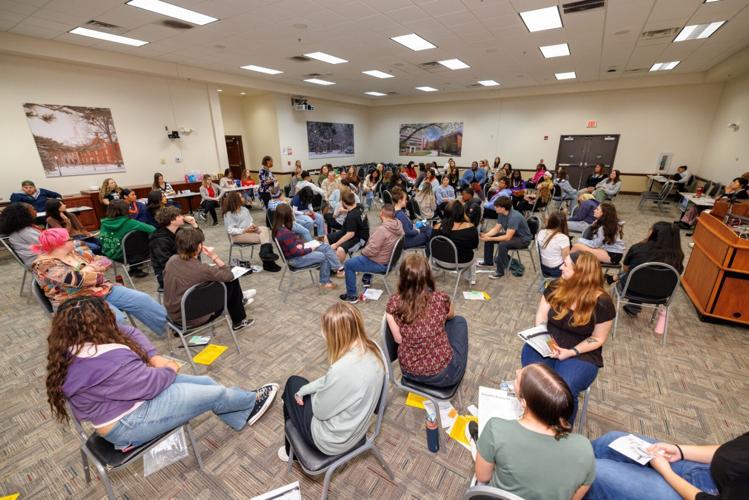
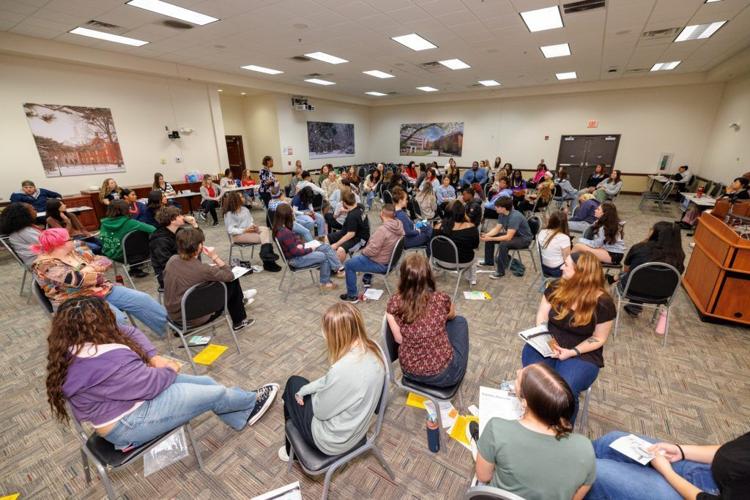
Illinois State University’s School of Social Work drew a record 85 students to its 18th annual poverty simulation, where participants spent the morning of October 26 navigating the realities of life on a limited income.
Dr. Stacey Wiggins, assistant instructional professor in the School of Social Work, attributed the record attendance to a growing number of social work majors drawn to the field’s career opportunities and the chance to advocate for people experiencing poverty and other challenges.
“I think that our world and our communities are recognizing the need for more social workers who can advocate for marginalized populations and vulnerable populations, like people who are living in poverty,” Wiggins said. “People are wanting to make a difference.”
The simulation gives students an opportunity to face some of the financial pressures and logistical challenges that families experiencing poverty navigate every day.
People are also reading…
“Students were reading about poverty, but they didn’t necessarily have an understanding of what it’s like to be in poverty,” said Dr. Gardenia Harris, director of the School of Social Work. “We wanted to try to provide an exercise that might help them understand a little bit of what it might be like and what their clients might be dealing with.”
Held at the Alumni Center, the annual exercise is part of the required course work for students in the School of Social Work.
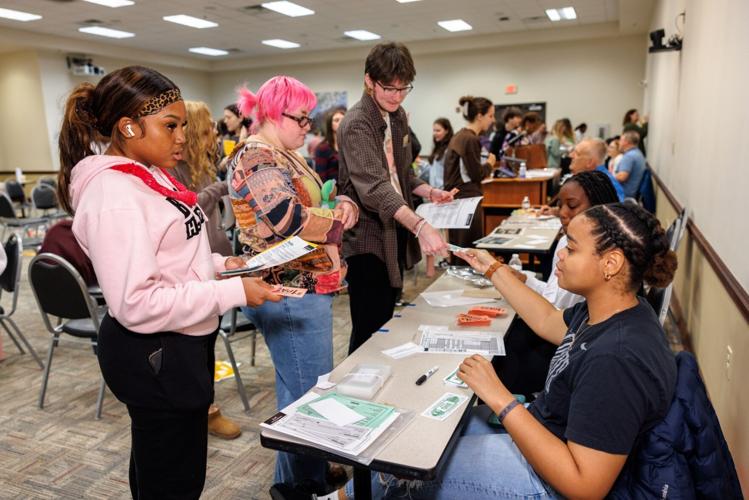
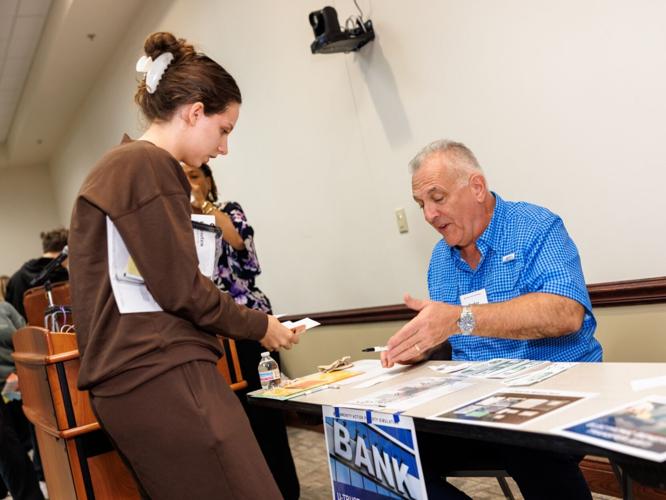
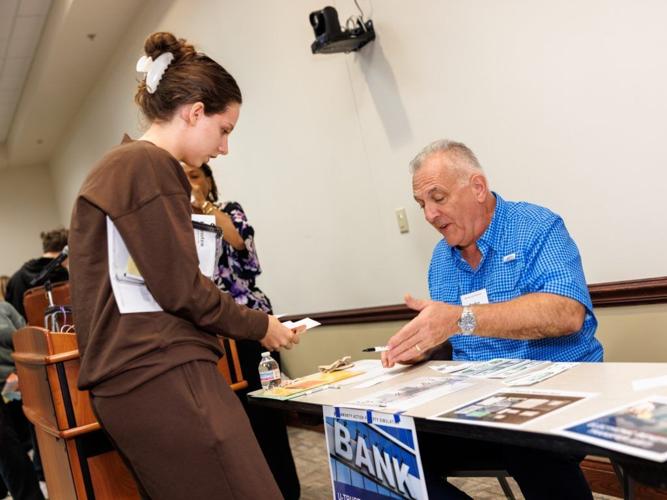
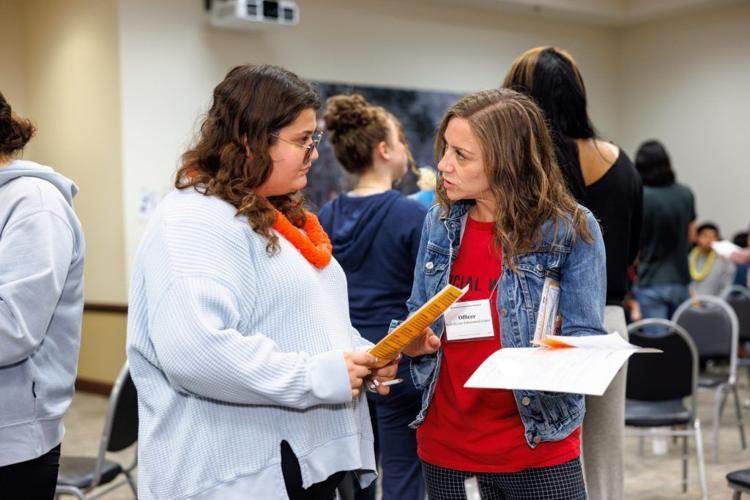
Students were divided into households and took on the role of parent, single parent, child, or grandparent. The room was lined with tables representing services and organizations, including an employer, utility company, bank, law enforcement, grocery store, and pawn shop.
Participants were tasked with working through a simulated month. Each week lasted 15 minutes.
Students determined how to earn money, pay rent and utility bills, obtain food, and access other necessary resources. They also encountered obstacles that made seemingly simple tasks difficult.
Harris said the simulation is designed to demonstrate how accessing resources requires more than simply knowing they exist.
“Society provides opportunities for people to get resources, but we want people to understand that there’s a financial cost and a time cost to actually acquire those resources,” Harris said.
Junior social work major Gabby Larson said participating in the simulation made those challenges more tangible.
“I think it’s important that we’re able to put ourselves in our client’s shoes and to understand their situation, because we never fully will.”
—Gabby Larson
Larson encountered long lines, limited resources, and unexpected complications as she attempted to meet her household’s needs.
“It was kind of intense, just because everyone was running, trying to get to the different resources. Some of the resources had really long lines, and they were unreliable because they would close down,” Larson said.
Larson’s role was mother-in-law with a disability. Although she received disability income, she struggled to access healthcare because she lacked insurance and money to pay for an appointment.
“I wasn’t really taking care of myself, and I was focusing on the kids and making sure that they had food and everything,” Larson said.
Larson described attempting to obtain housing assistance. After struggling to complete a lengthy application, she returned to find the office closed.
“I think they stress all of these resources that people have, but we don’t fully understand how unreliable those resources truly are,” Larson said.
Junior social work major Kailynn Osborne said she felt confused and frustrated as a simulated single mother responsible for two children.
As the household’s only adult, Osborne had to manage competing responsibilities without another parent available to help. She said finding employment was difficult because one of her children could not be left alone.
Osborne said transportation quickly became one of the biggest obstacles for her family.
“What really opened my eyes was how you really aren’t able to do anything without transportation,” Osborne said. “I don’t really have to think about that that much because I own a car.”
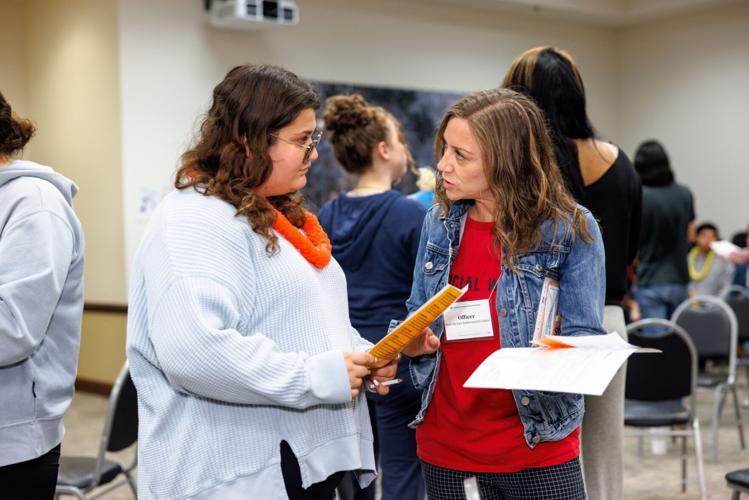
Abby Behrens, a prevention specialist with Prevent Child Abuse Illinois, has volunteered at the simulation event for three years. This year, she staffed the table representing a community health clinic.
Behrens noticed fewer students visiting the simulated clinic table, illustrating how families may have to put medical needs aside when other responsibilities become more urgent.
“We know that our bodies need that medical care, but in the real world, that’s not always the priority,” Behrens said.
Joey Keller ’18, director of operations and outreach for Mid Central Community Action, also joined the event as a volunteer. His table represented a social service agency during the simulation.
Before the end of the simulated month, his organization ran out of resources. Keller said the activity reflected similar challenges that nonprofits face.
“Everybody comes to you, and then your grants dry up, and you have to just give out referrals to other locations that might have funding,” Keller said.
Wiggins highlighted the importance of recognizing how families and communities support one another.
“I loved seeing the families that said, ‘We helped each other out,’” Wiggins said. “That’s creative. It’s resilient. It’s a way of surviving and even thriving in communities.”
Larson said the experience helped reinforce the value of empathy and the importance of building trust with future clients.
“I think it’s important that we’re able to put ourselves in our client’s shoes and to understand their situation, because we never fully will,” Larson said.


