



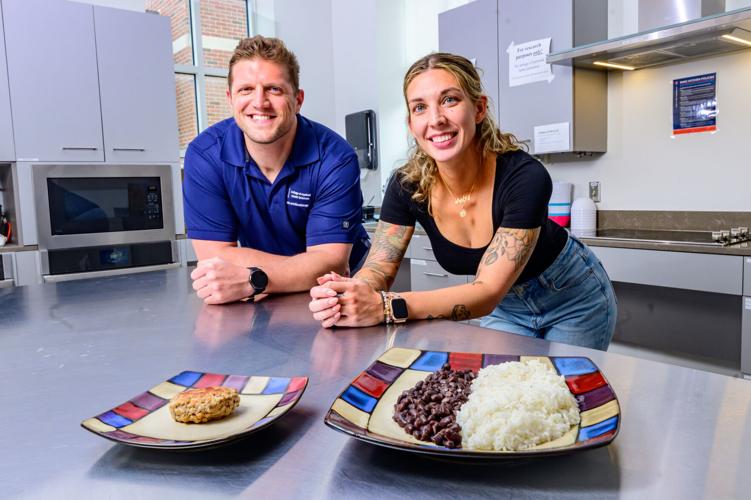
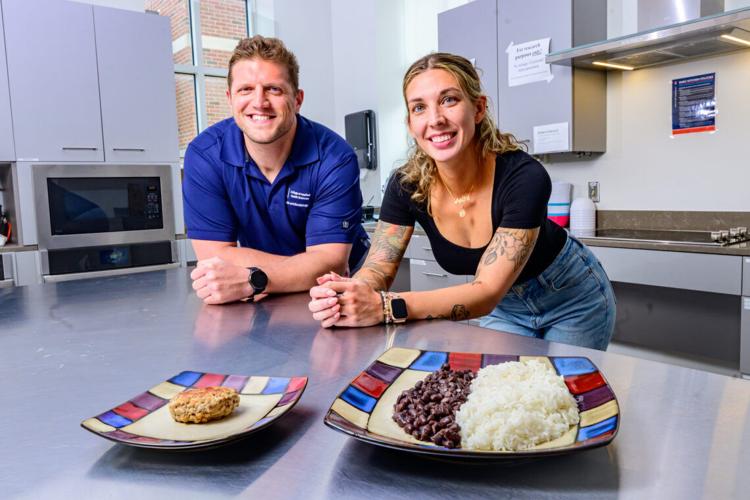
CHAMPAIGN, Ill. — In a randomized controlled trial, researchers tested whether a plant-based, whole-food, complementary-protein meal consumed immediately after a bout of weight training would stimulate a stronger muscle-building response than a nutritionally matched shake made with free amino acids. The study found no differences between the two, even though each contained 20 grams of protein. Both options yielded much lower muscle-protein synthesis than a post-workout meal of 20 grams of lean pork.
The findings are reported in the American Journal of Clinical Nutrition.
The study included 11 healthy adult participants in their 20s, each of whom engaged in a leg-press and leg-extension bout of exercise followed by a meal and several hours of muscle-building monitoring. Each person went through the protocol twice: once with a whole-food meal of rice and beans and once with the nutrient-matched shake that was specifically formulated with the same protein, fiber, fat and carbohydrate content as the rice and beans. The sessions occurred one week apart.
People are also reading…
“We wanted to look at the acute response in terms of how the muscle is recovering or building itself after exercise,” said University of Illinois health and kinesiology professor Nicholas Burd, who conducted the study with U. of I. Ph.D. students Žan Zupančič, Gena Irwin and Calvin Chen. “Our major goal was to look at a whole-food approach to see if it made any difference to the response when compared with a highly processed food formulated entirely from free, isolated nutrients in the form of a shake.”
The scientists took regular blood samples and leg muscle biopsies before the exercise and meal and for several hours after. Participants also received a continuous infusion of a labeled amino acid — a tracer that allowed the team to measure the rate of protein synthesis in the leg muscle in real time.
Both the rice and beans meal and the isolated nutrient alternative yielded significantly lower amino acid levels in the blood for several hours after the meal and had much weaker muscle-building effects than in previous studies where participants ate a post-workout meal consisting of 20 grams of protein from lean pork.
Those consuming the rice and beans or the protein shake after exercise had no more muscle-protein synthesis than participants in a previous study who consumed a post-workout meal containing only carbohydrates, the team found.
The fact that two nutritionally identical plant-based meals independently yielded the same diminished muscle-building response was likely due to the 114 grams of carbohydrates people consumed with the 20 grams of protein in each case, Burd said.
“When you eat plant-based whole foods, the proteins are bound in a fiber matrix,” he said. “We wanted to test whether that matrix was helping improve the muscle-building boost that comes from eating after a workout.” The results suggest that it did not.
“Complementary protein pairing is an effective strategy for improving protein quality,” Burd said. “But to achieve 20 grams of high-quality plant protein from whole foods, you must co-ingest a large amount of carbohydrates, which is probably slowing down gastric emptying. This means that if you’re a vegan athlete, you’re likely going to have to use an optimized protein source, such as a mixed plant-based isolate so you can get a high-quality protein while avoiding all those carbohydrates.”
The results also suggest that omnivores may want to limit the consumption of carbohydrates with their immediate post-workout meal, Burd said. “While consuming 50 to 60 grams of carbohydrates is often important for glycogen replenishment, it seems that exceeding that amount so significantly may limit blood amino acid availability for post-exercise muscle repair, a phenomenon that would likely impact animal-based meals as well. In general, animal foods offer far more amino acid ‘bang for your buck’ because they deliver high-quality protein with much lower total energy consumption.”


