


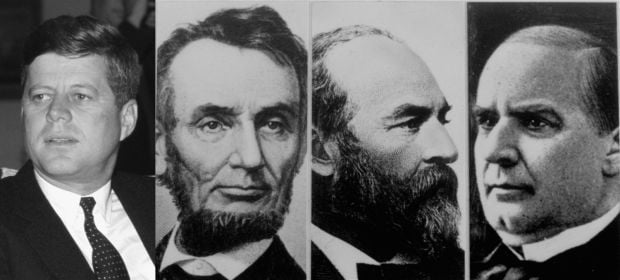
To date there have been 44 U.S. presidents. Like many influential government leaders throughout history, presidents have frequently been the target and occasionally the victim of assassination attempts. With the arrival of the 50th anniversary of the John F. Kennedy assassination on Nov. 22, it is appropriate to review the history of U.S. presidential assassinations and assassination attempts.
Abraham Lincoln
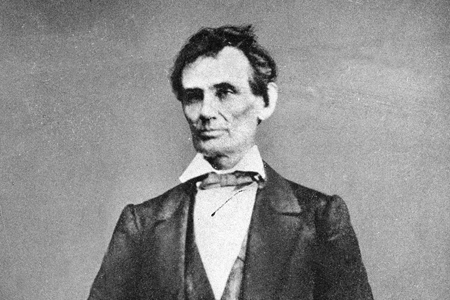
U.S. President Abraham Lincoln is shown in this undated photo. (AP Photo)
Abraham Lincoln was the first president to be assassinated. Shot in the back of the head on April 14, 1865, while watching a performance of “Our American Cousin,” Lincoln succumbed to his wounds the following morning, a mere five days after Confederate Gen. Robert E. Lee surrendered to Union forces, effectively ending the Civil War. John Wilkes Booth, an actor and Confederate sympathizer, was responsible for pulling the trigger. Booth, after firing upon Lincoln, fled the theater and fled Washington, D.C., before being trapped in a barn on April 26, 1865, where he was shot and killed.
People are also reading…
James A. Garfield
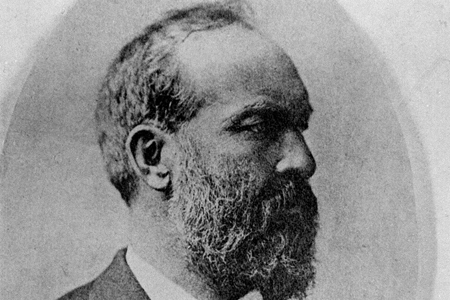
James A. Garfield, 20th United States President, is shown in this undated photograph. (AP Photo)
President James Garfield was shot on July 2, 1881, before reaching his four-month anniversary in office. The assassin was Charles Guiteau who shot Garfield twice, once in the right arm and in the back. Garfield survived for several weeks, but died Sept. 19, 1881, from complications caused by infection. Guiteau was arrested and put on trial immediately. While Guiteau used being rejected as a candidate to be ambassador to France as his reason for shooting Garfield, Guiteau’s lawyers tried to argue an insanity defense. In spite of this, Guiteau was found guilty and was hanged on June 30, 1882.
William McKinley
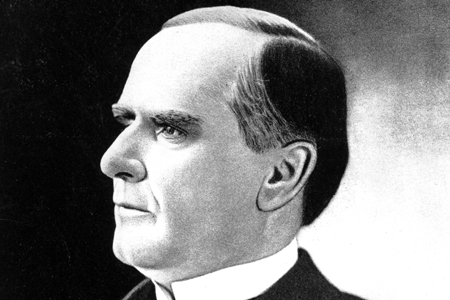
An undated photo of William McKinley, 25th President of the United States. He was inaugurated in 1897, and again in 1901 just prior to being assassinated on Sept. 6, 1901. (AP Photo)
William McKinley was shot Sept. 6, 1901, while attending the Pan-American Exposition in Buffalo, N.Y. Leon Czolgosz fired two rounds into McKinley’s abdomen, one of which was deflected harmlessly, while the second pierced his stomach. McKinley died eight days later on Sept. 14 from the poor sanitary practices by medical professionals at the time. Czolgosz was promptly apprehended and severely beaten following the shooting and it was believed he might die from his wounds before standing trial. He recovered and Czolgosz was charged with first-degree murder. Prior to the trial on Sept. 23, Czolgosz refused to cooperate with both his defense counsel and a psychiatrist who was sent to determine his sanity. Czolgosz was found guilty and was executed on an electric chair on Oct. 29, 1901. Czolgosz was a self-professed anarchist, though the actual intent behind the assassination was never made clear.
John F. Kennedy
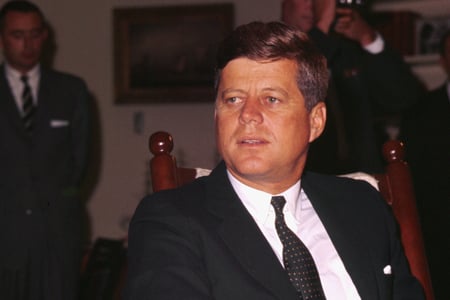
U.S. President John F. Kennedy.
The assassination of John F. Kennedy occurred Nov. 22, 1963, in Dallas, Texas. Kennedy was shot twice, once in the neck and once in the head, while riding in a motorcade. He was pronounced dead shortly afterward. Lee Harvey Oswald was later arrested and detained for questioning. As he was being transferred to the Dallas County Jail, Oswald was shot and killed by Dallas nightclub operator Jack Ruby before he could stand trial. Oswald’s death at the hands of Ruby was televised live. Kennedy’s assassination has been a magnet for conspiracy theories. According to recent polls, as many as 59 percent of Americans believe there was a conspiracy and Oswald did not act alone.
Failed assassinations
Andrew Jackson
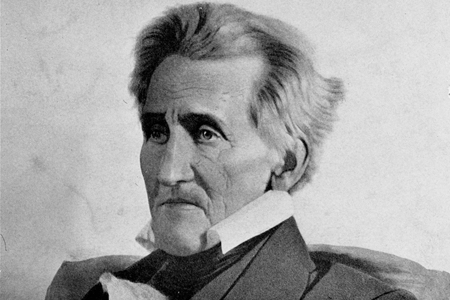
President Andrew Jackson, the 7th president on the U.S. is shown in an undated portarait. (AP Photo)
Nicknamed “Old Hickory” because of his aggressive and caustic personality, Andrew Jackson frequently engaged in duels, some of which were fatal to those facing him. On Jan. 30, 1835, a painter named Richard Lawrence attempted to fire two pistols at Jackson. Both of the pistols misfired, and Jackson beat Lawrence severely with his cane in retaliation. Lawrence was arrested and tried for the attempt, but was found not guilty by reason of insanity and placed in a mental institution for the remainder of his life.
Theodore Roosevelt
More than 10 years after Vice President Theodore Roosevelt succeeded William McKinley, Roosevelt was running for president as a member of the Progressive Party. While preparing to give a campaign speech in Milwaukee, Wis., Roosevelt was shot in the chest by John F. Schrank. The bullet’s trajectory was slowed by the 50-page transcript of the speech and metal glasses case that Roosevelt had stored in his breast pocket. After Schrank was apprehended, Roosevelt went on to give his campaign speech, saying, “It takes more than that to kill a bull moose.” After the speech he went to the hospital, and the bullet was found lodged between his ribs. The doctors deemed it too dangerous for surgery, and Roosevelt carried the bullet in his body for the rest of his life. Schrank claimed McKinley visited him in a dream and told him to kill Roosevelt. He was found legally insane and was institutionalized for the remainder of his life.
Franklin D. Roosevelt
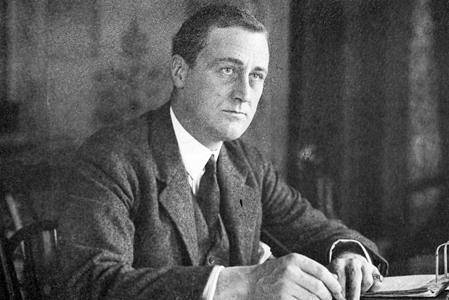
Franklin D. Roosevelt is seen, date unknown. (AP Photo)
On Feb. 15, 1933, Guiseppe Zangara, a bricklayer, fired five shots from a pistol at Franklin D. Roosevelt while he was visiting Miami, Fla. Roosevelt was unharmed, but Chicago Mayor Anton Cermak was killed and four other people were wounded by the gunfire. Zangara initially pleaded guilty to four counts of attempted murder, but he was brought back to court after Cermak died. His initial 80-year sentence was commuted to death and Zangara was executed by electric chair on March 20, 1933.
Gerald Ford
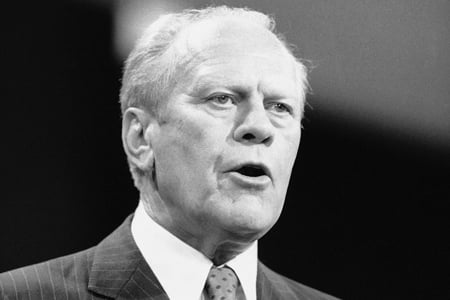
Former U.S. President Gerald Ford.
After Richard Nixon resigned as president on Aug. 9, 1974, Gerald Ford took office. Ford survived two separate attempts on his life in September 1975. Lynette “Squeaky” Fromme, a follower of Charles Manson, drew a pistol on Ford while he was making an appearance outside the California State Capitol on Sept. 5. No shots were fired. On Sept. 22, Sarah Jane Moore fired a pistol at Ford and missed. Both women were tried and sentenced to life in prison, though Fromme was released on in 2009, and Moore was paroled in 2007.
Ronald Reagan
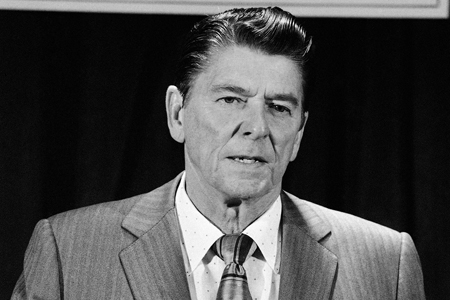
President Ronald Reagan.
Ronald Reagan and three others were wounded March 30, 1981, by gunman John Hinckley Jr. Reagan was struck in the chest by a single bullet, which punctured a lung and caused severe internal bleeding. After emergency surgery and two weeks recovery time, Reagan resumed active presidential duties. Hinckley was promptly arrested. He claimed his primary reason for making an attempt on the president’s life was to impress Jodie Foster. Hinckley was determined to be not guilty by reason of insanity and was institutionalized. Currently, Hinckley is allowed out of the institution for as many as 10 days to visit his mother. The visits are planned and tightly monitored.


