


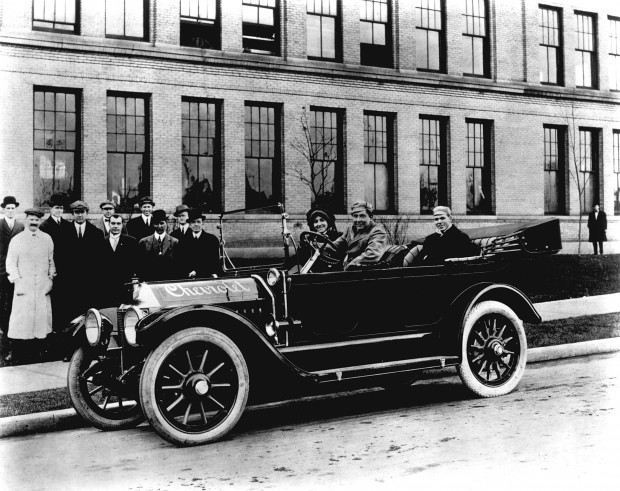

It can be argued that Chevrolet in the 1980s and ‘90s took its eye off the ball when it came to passenger cars, finally recovering, with notable success, upon the introduction of the marvelous 2008 Chevy Malibu. But GM's bowtie brand never lost its way when it came to trucks. From the first Model 490 Light Delivery to the current Silverado, Chevy trucks have been segment leaders in reliability, innovation and style. That's what makes picking our half dozen favorites so tough! There have been many great Chevy trucks over the past 93 years. See if you agree that these six models are the best of an awfully good lot.
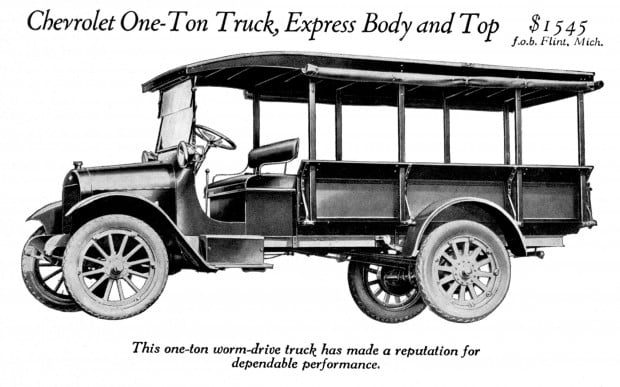
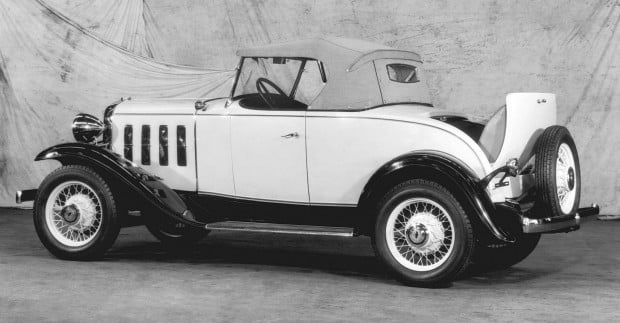
1918 CHEVY TRUCK: It was a banner year for Chevrolet. Not only did the brand become part of General Motors, but Chevy produced its first-ever truck. The Model 490 Light Delivery was based on the chassis of the successful 490 passenger car, which had been introduced as a 1916 model. The truck was offered as a "chassis cowl," which included a four-cylinder, 22-hp engine, three-speed transmission and a hood, front fenders, grille and headlights. Inside, the dashboard, steering wheel, foot pedals and shifter were lifted right from the 490 passenger car. Buyers of the 490 chassis-cowl were expected to provide their own cab and cargo box. A beefed-up, heavier-duty one-ton version also was available. Subsequent Chevy trucks would offer more perks - like doors and a roof, fer cryin' out loud - but, as far as Chevy trucks are concerned, this is the one that started it all.
People are also reading…
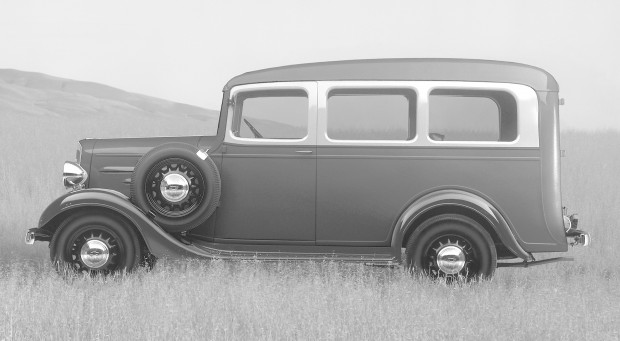
1935 CHEVY SUBURBAN CARRYALL: In 1935, the powers that be at Chevy got an idea: combine a pickup front end with a station wagon rear end and assemble it all on a tough truck chassis. The result was the 1935 Suburban Carryall, a vehicle most folks consider the first SUV, although that term would not come into use for another half century. Featuring six-cylinder power, three rows of seats and loads of cargo versatility, the Suburban Carryall was the first family-friendly truck. The vehicle was so popular that the name "Suburban," which up to that time had been used by every auto maker from Dodge to Studebaker, pretty much became the property of GM in the public's mind. It did so legally 53 years later when General Motors in 1988 secured the name as a trademark after all other companies had ceased using it. GMC got a version of this vehicle in 1937, offering it under the "Suburban" name until model year 2000, when GMC's version adopted the name Yukon XL. At Chevy, it's still a Suburban - the longest continually running vehicle nameplate in the industry.
1948 CHEVY TRUCK: Chevy was the first truck maker to introduce an all-new pickup for the post-war era, and it was a beauty. The 1948 Advance Design pickup, which debuted in June 1947, featured a significantly larger cab than its predecessor and - in a nod to GM's wartime production of military vehicles - a chassis that Chevy dubbed "Unisteel Battleship construction." Big doors, lots of glass and three-across bench seating made the ‘48 Chevy like no pickup that had come before. Throw in a 90-hp six, an available four-speed transmission - heady stuff in ‘48 - and styling that actually showed some style (a revolutionary idea for a truck in the first half of the last century) and you can think of this one as the granddaddy of the modern pickup. In a historical footnote, this truck was the styling inspiration for Chevy's 2003-2006 SSR fold-away hardtop convertible pickup.
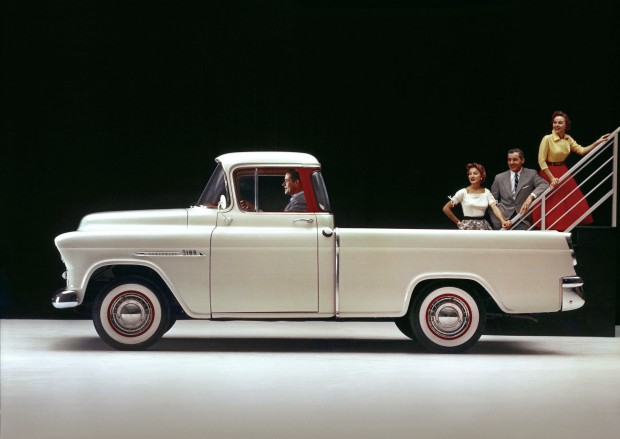
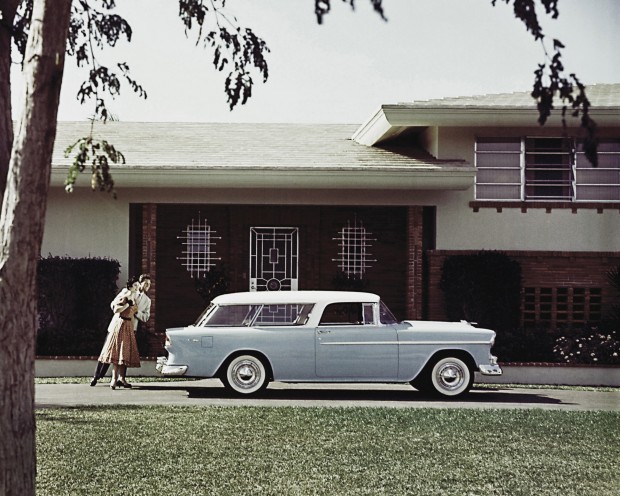
1955 CHEVY CAMEO CARRIER: The ‘55 Cameo Carrier was 30 years ahead of its time, anticipating by three decades the personal-use/luxury truck that would come into its own in the 1980s. No longer just for farmers and construction sites, the Cameo Carrier, as this photo shows, was a pickup designed for weekends as well as work. It was as comfortable at the opera as it was on the farm - and it didn't have to be the Grand Old Opry, either. Sure, Cameo Carrier boasted a gross vehicle weight rating of 5,000 pounds, just like other ‘55 Chevy pickups, and it shared its cab and front sheet metal with other Chevy trucks, as well. But the Cameo just looked cooler. Its available two-tone paint job, along with its plastic rear fenders, which gave a sleek-side look, proved that pickups could make a styling statement as well as a payload promise. This was a tony, personal-use pickup before suburbia discovered what a handy and fun vehicle that could be. In other words, it was a cool pickup before pickups were cool. A 1957 model is shown.
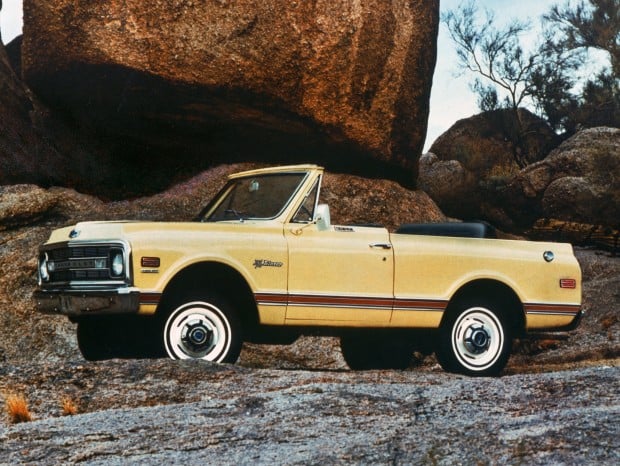
1969 CHEVY K5-BLAZER: This bruiser was launched to compete with the International Harvester Scout and the Ford Bronco. It wound up bucking the Bronco and harvesting scads of International customers, outselling both of its rivals within a year. What a concept it was! The 1969 K5-Blazer - its "Blazer" moniker short for "trailblazer" - was a convertible vehicle on a truncated pickup platform with seating for five and standard four-wheel drive. (The two-wheel drive version didn't arrive until 1970.) Capable of climbing a rope in the rough, this roughneck also offered such available "luxuries" as air conditioning, bucket seats and that new Turbo Hydra-Matic automatic transmission of which GM was so proud. The 1969 K5-Blazer was rolling proof that a rugged truck could provide both notable cabin comfort and nearly unstoppable outback capability. To this day, the K-Blazer, which was discontinued after the 1994 model year when it was replaced by the Tahoe, remains a common sight at campgrounds and on 4x4 trails.
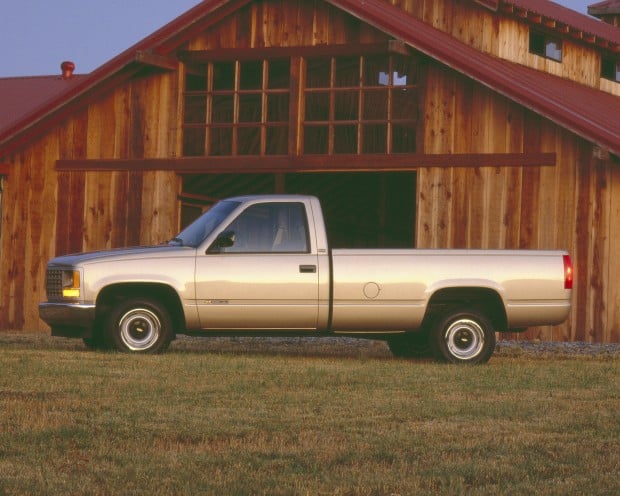
1988 CHEVY PICKUP: By 1987, Chevy' s full-size pickup was old enough to worry about changes in Social Security. Basically the same truck that had been introduced way back in 1973, the old boy was ready to pass the baton to a younger standard bearer. Out of the bullpen came the fourth generation of the bowtie truck - the stunning 1988 C/K. ("C" identified 2WD versions, "K" was the label for 4WD iterations.) Riding an all-new platform dubbed GMT400, C/K featured cutting-edge technology, better fuel efficiency, a roomier interior, higher payload capacity, enhanced towing muscle, a smoother ride on its revised independent front suspension (now included on 4WD models, too) and slicker, more aerodynamic styling. It was a quantum leap over its hoary predecessor. The sophisticated new platform also made possible luxurious pickups for the "personal use" crowd - a new market for full-size pickups. No longer merely a commercial and farm tool, pickup trucks by 1988 were cool. And there was no pickup cooler than the 1988 Chevy.
Dan Wiese is a freelance automotive writer. You can e-mail him at: drivingwithdan@gmail.com


