


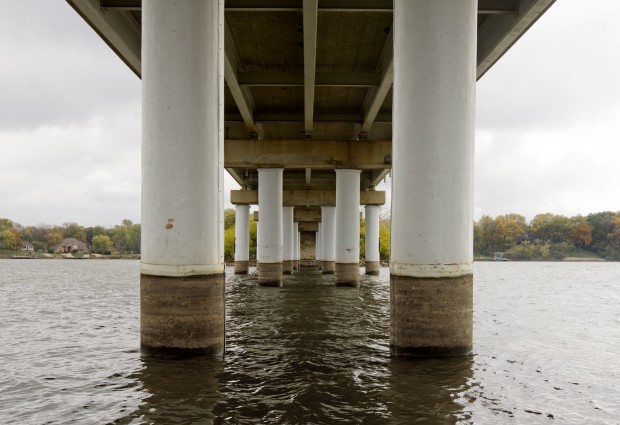
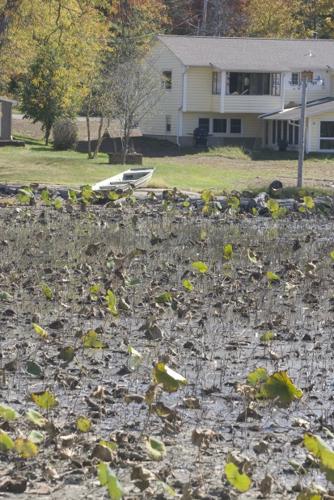
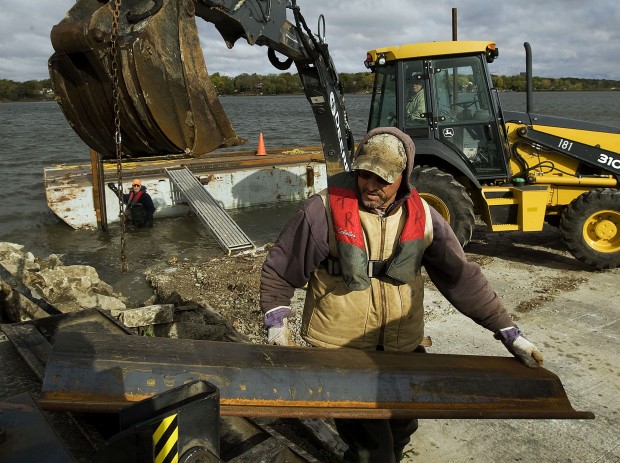
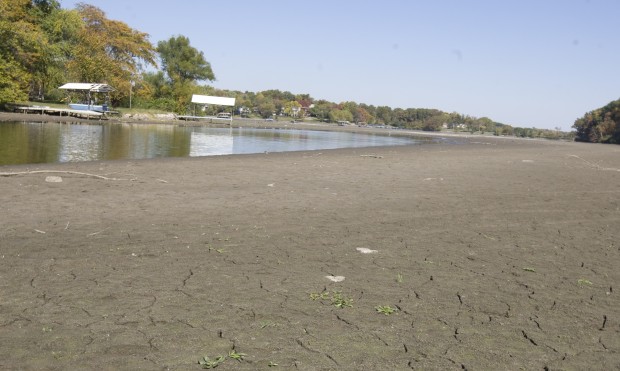
DECATUR - With each passing day, the surface of Lake Decatur gets a bit lower, the sandbars grow larger, and the prospects for easily removing boats from the water more remote.
Despite a few days of rain over the past several weeks, Decatur remains under a dry spell that seems unwilling to let up and has led to mandatory conservation measures.
Currently, restrictions are fairly light. Residents are allowed to water their lawns on Tuesdays, Thursdays and Saturdays, and any car-washing needs to be done at commercial car washes. Washing streets, driveways, sidewalks and parking lots is prohibited without advance permission by the Decatur Water Services Division, restaurants must serve water only when asked, and detectable water leaks need to be patched within 72 hours of discovery.
Water Management Director Keith Alexander said water use hasn't noticeably declined since the restrictions were put in place, though water use is down since the start of the drought. City personnel are planning for the strong possibility of further restrictions, he said.
People are also reading…
But even the mild restrictions have affected residents as some have been slapped with citations over the past weeks. Some, including city Councilman Larry Foster, have asked why there can't be warnings issued before residents are given citations.
During a city council meeting last month, Foster asked City Manager Ryan McCrady about the possibility of issuing warnings before handing out $200 citations.
"As a city, we're really not trying to have these fines to raise money. We're trying to change behavior," Foster said. "I believe that most everyone in Decatur wants to be a good citizen and help in these times of drought. I think the majority of people probably have not intended to (violate the restrictions). I think (issuing warnings) would send a message to the community that we're trying not to be a difficult city to get along with."
McCrady said issuing warnings is difficult because it would require keeping track of who has already been issued one. McCrady said 18 citations have been issued so far.
"If we issue warnings, there's a cost to doing that," McCrady said. "If the person violating the law doesn't pay the cost of that, then all the law-abiding citizens cover the cost of that."
McCrady said another common complaint is that enforcing the restrictions isn't the best allocation of police officers' time.
"We don't have officers on sprinkler patrol," McCrady said. "If they get a call about water violations, all calls are prioritized. It isn't that they're not going to respond to a bank robber because somebody's watering their lawn."
However, officials are studying even stricter measures.
"The cooler temperatures certainly help, and the fact it's fall now means most landscape plants need less water, and some would probably do well without water for the rest of the year," Alexander said. "However, the lake still does continue to decline at the rate of a third of an inch each day. We will have to seriously look at stage two restrictions in the near future if we continue to receive limited rainfall."
Alexander said further restrictions would likely include prohibiting landscape watering on more days out of the week, reducing the days car washes could accept customers, and further increasing the price of water sold at the bulk water station (currently priced at 150 percent as part of restrictions already in place).
Part of the lack of any major effect on water use could be that people are already conserving, Alexander said.
"I think what we're reaching is a baseline amount of water, about 20 million gallons per day, that will be difficult for our community to conserve (further)," he said. "(Restrictions) can also be looked at as money-saving suggestions to our customers. Maybe that's the mind-set that would be most useful if we have to go into stage two restrictions."
Residential customers account for about 22 percent of water consumption in the city, while commercial, industrial and government customers account for the remainder, according to city figures.
Jessie McKinney, spokeswoman for Archer Daniels Midland Co., said the company has been trying to reduce water consumption through a variety of means. The company was using about 3.9 million gallons of water per day in late September, down from 5.2 million per day during the summer. At the city's request, the company started water conservation procedures in August, she said.
"ADM continues to meet regularly with the city to discuss how we can do our part to help conserve water during this drought," McKinney said.


