

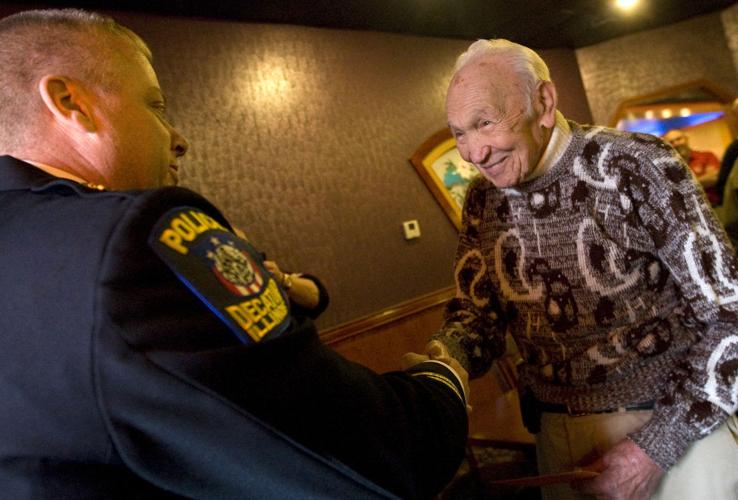
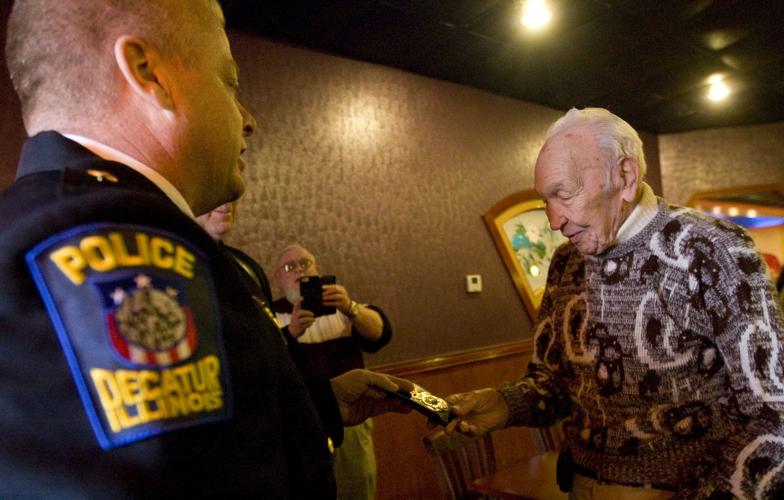

DECATUR – Floyd Zerfowski was a young patrol officer, just a few months on the beat, when he fired his revolver for the first and last time while on duty.
Sixty-six years later, his memory of the incident is still fresh.
“I shot someone,” said Zerfowski, 96, when asked if he ever caught a suspect during his early years, when he walked a beat on the graveyard shift.
A building, on the northeast corner of Eldorado and Jasper streets had a door ajar. It was about 5:30 a.m., near the tail end of his shift. That door was locked when he checked it a few hours earlier.
“The building was broken into and I went in by myself,” Zerfowski recalled. “I walked through the doorway. I was in the light and he was in the darkness. He hit me with an iron pipe. I just automatically shot him.”
People are also reading…
The 25-year-old suspect apparently died instantly. Zerfowski ran across the street to the Lincoln Hotel to call in the incident to headquarters.
The death of the suspect, a parolee who served a prison term for armed robbery, was ruled as a justifiable homicide the following day by a coroner's jury, said a Decatur Review news story published Oct. 7, 1949.
Zerfowski, cleared of all wrongdoing, returned to work that day.
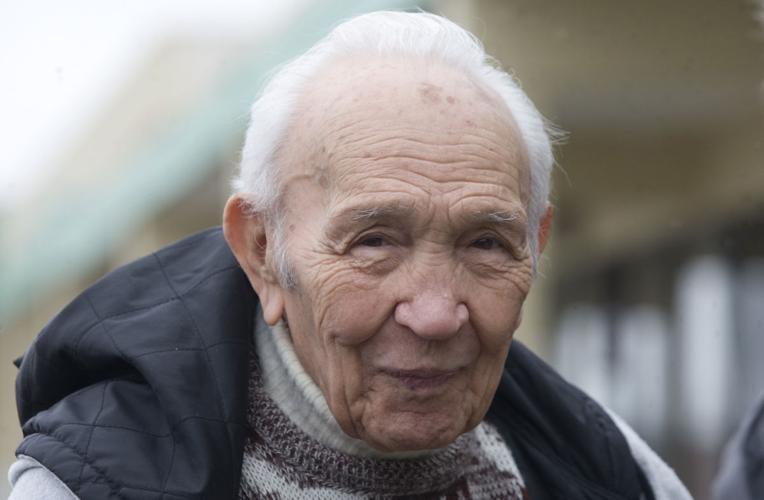
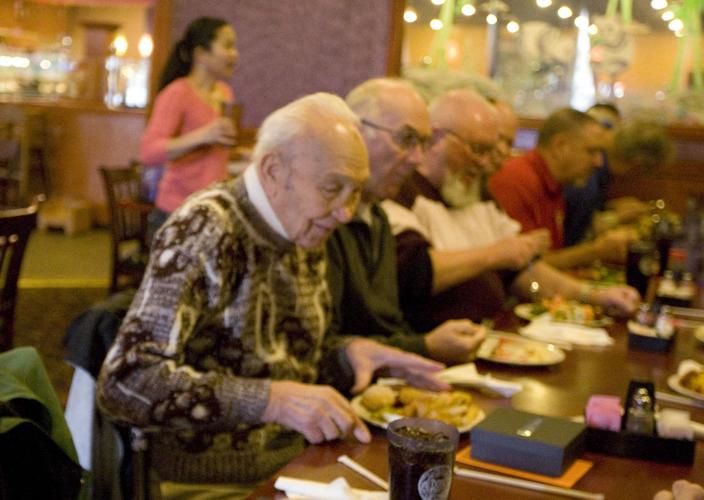
The oldest living retiree from the Decatur Police Department, Zerfowski is still mentally sharp and physically active. He regularly attends meetings of police retirees, most of whom joined the department after he retired in 1970.
Born in Fort Wayne, Ind., the son of a Wabash Railroad worker, Zerfowski moved to Decatur when he was three years old and has been here since, with the exception of a stint as a wartime worker in Northern Illinois.
After he received a draft deferment because of a childhood injury which prevented him from breathing through his nose, Zerfowski was employed building 105mm shells on an assembly line in Elwood during World War II, then as a machinist working on tank engines at the Decatur Caterpillar plant.
He met his wife, Lois Stephens, when they worked together at Caterpillar. They were wed in 1945, “on the day they buried President Roosevelt,” Zerfowski said. After 42 years together, Lois Zerfowski died in 1987.
Before he hired on with the Decatur Police Department on June 16, 1949, Zerfowski worked as a contract truck driver for the post office.
He saw a newspaper ad, announcing the city was hiring for the police and fire departments. He preferred the relatively regular hours officers kept, rather than the lengthy shifts of firefighters.
“Work eight hours and then you're done at the police department,” he said.
At that time, he knew Otto Salefski, a Decatur officer who lived across the street from Zerfowski. Coincidentally, when the shooting incident occurred, Lt. Salefski was one of the first to appear on the scene, according to the news article.
Zerfowski established an excellent reputation. Just four years after he was hired he was assigned to take part in a unique operation involving a road trip by a recently retired U.S. president.
“Floyd Zerfowski, a 33-year-old Decatur police officer, reported to work at 11 o'clock as usual,” says a passage in the book, 'Harry Truman's Excellent Adventure.' “But when he got to the station, he received an unusual assignment: he was to spend the night protecting Harry and Bess Truman.”
Zerfowski recalled that the chief of police found out that the ex-president was in town in June 1954. He assigned him and several other officers to sit outside his room at the Parkview Motel, Pershing Road and 22nd Street.
“They didn't have Secret Service protection then for ex-presidents and no pensions,” Zerfowski said. “Three of us went to the motel. We sat in lawn chairs all night.”
The following morning, Truman took the officers out for breakfast at Grove's restaurant.
“He was real nice to talk to,” Zerfowski recalled. “He'd stop to talk to anybody. If anybody wanted to shake hands, he'd shake hands.”
Zerfowski was the only officer who guarded Truman who remained alive when author Matthew Algeo came to Decatur in 2006 to research his book. His interview was featured in the book.
During his first decade, Zerfowski worked third shift, from 11 p.m. to 7 a.m. His wife worked the day shift at the Borg-Warner plant.
“We never saw each other much,” he recalled.
They raised two daughters, Janet Denton and Ruth Ann Laverty.
Police work did not pay as well in those days. Officers were expected to purchase their own uniforms and firearms. Zerfowski carried a Smith & Wesson .38 Special.
“The city furnished a night stick and your badge,” Zerfowski recalled.
“I liked to be on the beat, on the street,” Zerfowski said. “I got to know the people in the businesses. You got to know different people and areas of the town and what's going on.”