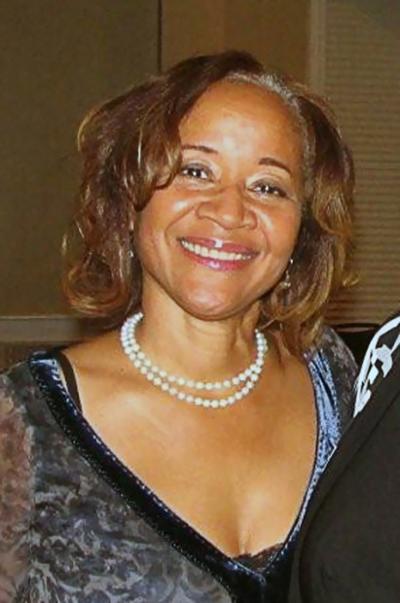

CHICAGO — When Stephanie Livingston was a teenager, she enjoyed advice columns and watching Phil Donahue on TV, but she didn’t realize at the time that those pastimes would lead to a career in psychology.
“I remember reading Ann Landers’ advice column as a teen and watching Phil Donahue with my mother, who was always trying to expand her knowledge,” Livingston recalled. “We would discuss some of the issues, and I became interested in reading self-help books.”
Livingston, who now has a Ph.D., is in private practice in pain psychology in two Chicago area locations, South Holland and Michigan City, Ind. Livingston also expects her latest book, “Long Shot: Winning the Race Within, For Single Women,” to be published soon.
That thirst for knowledge was instilled early in Livingston as she was growing up in Decatur.
People are also reading…
“I insisted on educational and family values,” said her father, Horace Livingston. “We spent each evening supper with the family every day.”
When Stephanie Livingston graduated from Stephen Decatur High School, she enrolled in Sangamon State University (now the University of Illinois at Springfield), Livingston said she was influenced by two professors, Jonathan Hess and Melvin Hall, to continue her education.
“Both had a great influence on me,” she said.
Livingston went on to work at the Michael Reese Hospital in the medical audit doctorate program. She attended the College of DuPage, where she discovered her interest in biofeedback, which is now her specialization.
“Biofeedback, a psychological technique, is a very healthy: no drugs, treatment for pain and wellness. The clearer your mind is the better decisions you can make,” Livingston said. “Using biofeedback helps balance your life, maximize your potential.” This accounts for fewer days off of work and not having to use your insurance as often. “The techniques employed include breathing and imagery.”
For example, in treating migraine headaches she said, “Blood engorges the blood vessels in the brain,” with biofeedback, “Blood goes to the extremities and lessens the amount of blood in the brain, thus lessening the pain.” This is done using a sensor that the patient wears.
High blood pressure can be treated as well as stress and anxiety. Chronic pain can lead to depression so it helps in alleviating that as well.
She gained more expertise and hands-on training with David Montrose, who invited her to volunteer at the Diamond Headache Clinic (a world-renowned clinic) and in the process Montrose urged her to apply for a doctorate program at Loyola.
“I got in,” said Livingston, “and then I felt it was fate because I found a job opening in the paper for Northwestern Medical Rehabilitation at the Institute of Chicago in the department of psychology and was assigned to the pain clinic.”
She then went back to the University of Chicago Hospital, doing her internship in behavioral medicine/health psychology for one year, after which she became an assistant professor for about three years.
During her time there, Livingston had the chance to become a role model and inspiration for William Lawhorn. “I admire her and chose to study under her at the University of Chicago because of her reputation,” said Lawhorn who now specializes in bariatric psychology in Dayton, Ohio.
“She was instrumental in helping me get a part-time consultation job at Diamond Chronic Headache Clinic, which was an incredible experience,” he said.
Livingston returned to Diamond Headache Clinic and became their director of behavioral medicine for seven years. In 1998, she went into her own practice, where she uses biofeedback techniques to treat patients.
Livingston credits a divine inspiration for her ultimate career choice.
“It wasn’t in my hands; it was in God’s,” she said of her path to her profession. “My whole career is amazing. There is a God, because too many things fell into place to be happenstance.”
plarson@herald-review.com|421-6983