



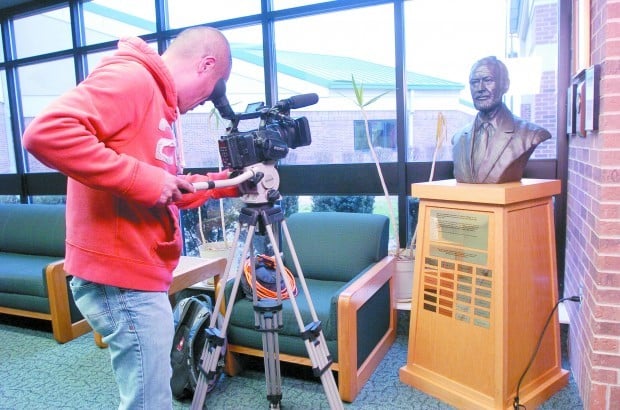
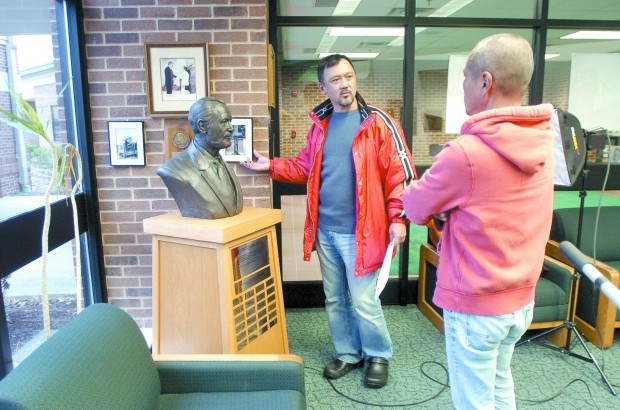
MATTOON — The story of Arland Williams brought a Japanese television crew to Mattoon for filming a documentary piece about heroes across the world.
Williams, a Mattoon native, died Jan. 13, 1982, along with 77 others after an Air Florida jetliner crashed after takeoff and sank in the Potomac River in Washington, D.C. Williams later was honored for his bravery that day: He repeatedly passed on the lifeline suspended from a rescue helicopter to other crash survivors clinging to the tail section of the airliner in icy waters.
Atsushi Toyzume, a freelance director working on the documentary for Japanese Television with Toshi Soen, the cameraman and sound technician, said there is a rich texture to the Williams story, including the dedication of his Mattoon High School classmates to honoring his memory and how Arland D. Williams Jr. Elementary School emphasizes virtue education, based on Williams’ life and actions that tragic day nearly 29 years ago.
People are also reading…
“It is a beautiful story,” said Toyzume as Soen prepared close-up shots of images of Williams and memorabilia, including a replica of a national lifesaving medal, at the elementary school. “You see this happen in drama in the movies, but it is hard to find true stories like this one, especially now.”
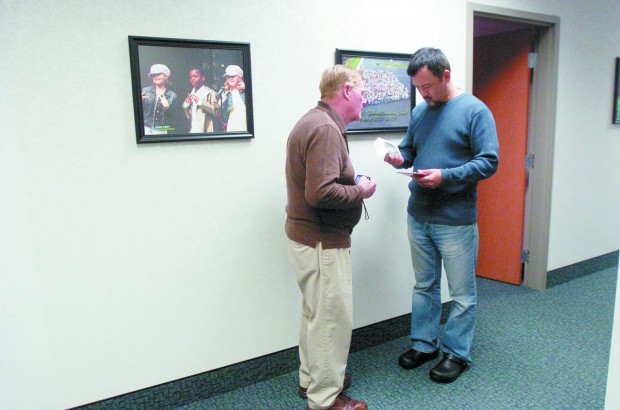
With a thick folder of research documents and photographs, Toyzume concentrated on much more than that snowy, windy day in Washington decades ago. The Japanese producers of the show wanted to find out how growing up in Mattoon helped make Williams into a hero. His story will be among many others about heroism from across the globe.
“We’re trying to answer what person he was. Other television shows have covered the crash very well. But we wanted to know more of him and the people who grew up with him,” Toyzume said.
“Nobody has ever done this so much in-depth,” said Peggy Fuesting, a Mattoon High School classmate of Williams nearly five decades ago and part of the Arland Williams scholarship committee. “He’s been gone all these years and, yet, he has reached out and touched so many people.”
During the interview at her Mattoon residence, Fuesting told Toyzume and Soen how Williams was a bank examiner and had testified in a fraud case before the fatal plane crash. She said he had great character and determination instilled in him by his time in Mattoon and his studies and military training at The Citadel.
But there were also personal stories that added to the texture of the interviews, such as how Arland once joked he kept coming back to Mattoon like “a bad penny” or how he used to laugh at being called “Chub” in high school. A cluster of old photographs also brought back memories of dates and family gatherings in Mattoon.
“I think the story of Arland is so compelling because of Arland’s personality and how he got along with everybody. You never heard him say anything bad about anybody,” said Jack Collinsworth, another 1953 classmate of Williams who joined in the recent Japanese television interviews and tours.
“His training at The Citadel instilled in him many core values,” Collinsworth said. “And those values are emphasized in essays written each year by Williams school students. You never know until you’re faced with something like Arland was just what you’ll actually do. But we all admired him long before that happened.”
A donation by Williams’ family helped establish the annual scholarship awarded to Mattoon High School graduates enrolled in college seeking careers in accounting or related fields. But it was also the admiration and determination of the high school alumni who knew Arland that helped bring about other honors for the local hero, including the naming of the elementary school a decade ago.
Toyzume was impressed with how the legacy of Williams is being passed on to generations of young people in Mattoon. He believes it is vital for youth, including those in Japan, to hear the stories of heroism by ordinary people. The documentary will air in Japan next year, but production rights might prevent its broadcast in the United States in a dubbed version, he said.
“We need to find these true stories, especially now. Young people in Japan have lost the desire to help other people. Most young people there are thinking of themselves only. That needs to change,” he said.
hmeeker@jg-tc.com|238-6869.


